
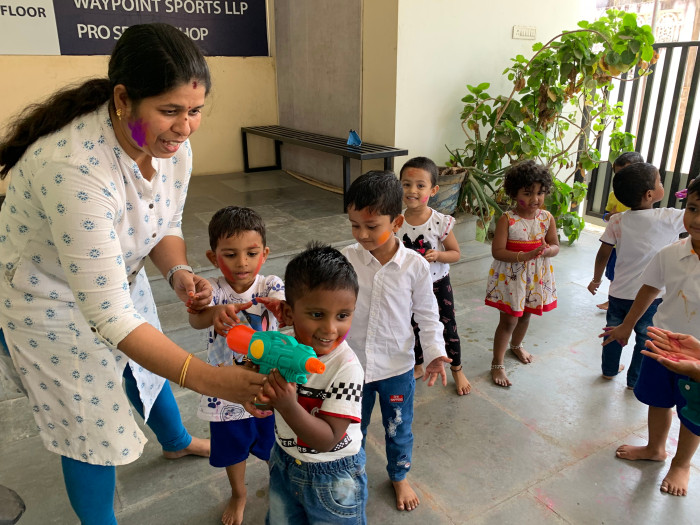
The Montessori education system employs a learning approach that encourages children to be self-motivated as they engage in various activities within the school. Moreover, they get to learn in an independent and joyful way, leading to better outcomes for them.
To lay a strong foundation for your child’s future academic learning and life ahead, you should know the ideal learning approach.
Core Montessori Principles for Early Childhood Learning
These 7 main Montessori principles are foundational elements of the Montessori education system. Every parent, teacher and school administrator should have a good understanding of them.
-
- Movement Improves Cognition
-
- Gives Children the Freedom of Choice
-
- Allows Them To Work On Their Interests
-
- Extrinsic Rewards Don’t Provide Value
-
- Context Enriches Learning
-
- The Teacher’s Way Becomes The Way of The Child
-
- Order in the Environment Has a Bearing on Order in the Mind
Let’s know about these principles in some more detail.
Movement Improves Cognition
Maria Montessori was an Italian physician. Her profound observations and extensive research culminated in the Montessori education model. Schools worldwide have been following this approach for about 100 years to impart learning to young minds.
As per Maria Montessori, if there is no movement, learning is not possible. For this reason, a child has to make movements to learn.
This can be better understood with this example. When adults buy a new gadget, they have to physically explore and investigate it with their hands and eyes to learn about its new and latest features.
Get Better Understanding
Here is another example. When we were newborn babies, we started making movements immediately after coming out of our mother’s womb. This is nature’s way of teaching that movement is absolutely essential as it contributes to life.
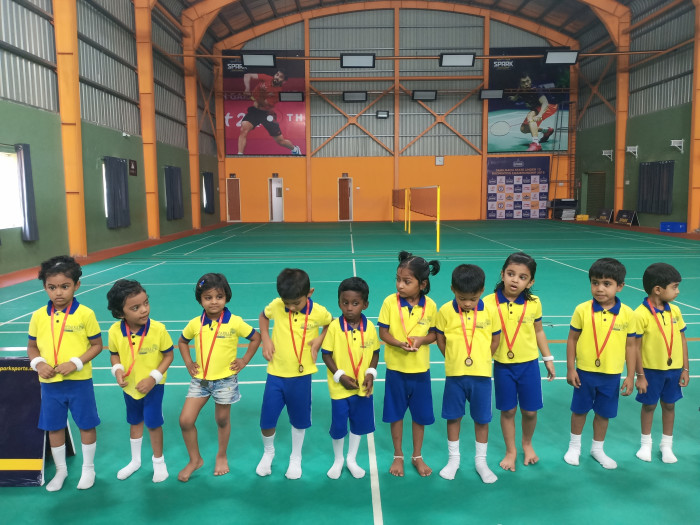
If there is no movement, cognition is simply not possible. For this reason, movement is the first principle of Montessori education.
Whenever or wherever you are creating a Montessori environment, you must ensure that there is adequate space for their learning. They can move around there and explore and investigate things around them. This enables them to learn from the experience.
Gives Children the Freedom of Choice
Some studies were conducted. Their results showed individuals’ learning and well-being improved when they have a sense of control over their life. In a similar way, when children are allowed to choose materials for play-related activities, this gives them a sense of control.
Compared to this child-focused approach, traditional education doesn’t give children the freedom to choose their own play materials. Here, teachers, parents, or caregivers instruct the child to use particular materials to play with. Once he has finished playing with them, they will provide him with other materials.
Limitations of Traditional Approach
Such an approach doesn’t allow the child to make the choices and instead forces adults’ choices on the child. This is not good for the child’s development. This makes him feel that teachers, caregivers, or parents are controlling him all the time.
When a child doesn’t have a sense of control, he is less likely to take ownership of what he is learning. Over time, his behaviour of not taking ownership is likely to permeate into other areas of his life as he grows up.
Allows Them to Work on Their Interests
As individuals, when we have an interest in something, we will better apply ourselves into it. Moreover, we will learn better from the experiences gained. This is part of human nature. Therefore, it also holds goods for children. For this reason, this is considered one of the most fundamental Montessori principles of Montessori education.
Rather than asking them to do a particular thing, children should be given the freedom to follow their interests. Moreover, they should be consistently given opportunities to learn by doing things of their interest. This resultantly enhances the depth and width of their learning.
Extrinsic Rewards Don’t Provide Value to Children
If you keep on motivating children to do something for a reward, then this will not result in meaningful outcomes. Though you may have good intentions behind offering the reward, it will not help.
To start with, when children are doing something that they like to do, they are not at all looking for rewards.
Promising your child a chocolate or ice cream for doing his homework or any house-related task doesn’t work for your child. Rather, it can prove counter-productive in the long run.
Rewards Discourage the Child
In case your child gets used to rewards for doing particular tasks, a time will come when you will be forced to stop giving rewards. When the child does not get rewards as in the past, this will discourage him from doing anything.
When children are given the freedom and opportunity to do what they like, they don’t need anything from you. Moreover, they don’t expect anything from you. This means they are always self-motivated and enthusiastic when they do things out of their own will. Thus, they learn better in the process.
They will keep this outlook for the rest of their life. This will be beneficial and useful for them in the future.
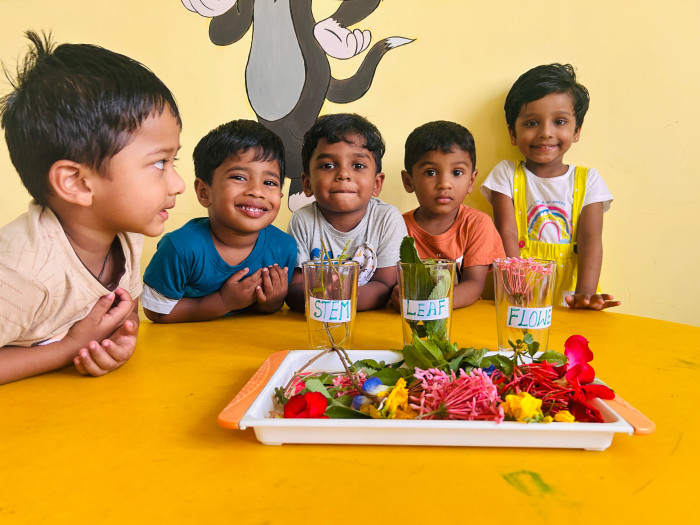
Context Enriches Learning
If you want learning to happen for your children in school or at home, you need to do one most foundational thing. That is to make your child’s learning a meaningful activity.
As an example, your child was just introduced to farming equipment in a lesson. Then it is important to give them the experience of being in an actual farm setting where such equipment is used.
No matter how hard you try to make him learn everything about farming-related equipment from the lessons in the classroom, this will not make any sense to them. This is because the child doesn’t have any idea about what farming equipment actually looks like.
Real Experience Enhances Learning
But when you take him on an exclusive tour to a farm, he will see farming equipment being used in a real environment. Spending some minutes on the farm will help him learn much more than what he learns during a 90-minute lesson divided into two subsequent classroom sessions.
After going through the real experience, the children will develop an interest towards the subject. Moreover, they can better understand it. When you talk more about the subject after your child gets the real experience, he is already familiar with its context, and he is willing to enhance his understanding about the subject.
The Teacher’s Way Becomes the Way of the Child
Though anyone can interact with a child, not every adult knows how to interact with a child in a way they are supposed to interact.
Children learn what they get to see. This is the first and most foundational fact that every educator, parent, and caregiver must know and always remember.
Children learn more from observing the behaviour of adults than from adults speaking a thousand words while interacting with them. For this reason, knowing how to interact with children is important. This is because children not only always observe the words we speak, but they also observe how we behave with them.
Learning How to Interact is Important
If a parent, teacher, or caregiver learns how to interact with a child, then they can successfully develop intended behaviours in the child. Their interactions play a role in the development of these behaviours.
These are some aspects of an interaction with a child. They, along with other things, determine the outcome. These aspects include the language to be used for interaction, the particular vocabulary to avoid, the desired tone of message, pace of words, when to be subtle in communication, etc. The other aspects include when to be firm during interaction, how to avoid pampering the child, etc.
Whether the desired outcome will happen or not in the child will depend on how the above aspects were performed with the child. This is why it is one of the most significant principles of the Montessori method of education.
Order in the Environment Has a Bearing on Order in the Mind
The first thing you will observe when visiting a Montessori classroom is that there is complete order in the classroom environment. When you observe a little more closely, you will discover that every material is kept at a particular place. Moreover, each place is meant for a specific material.
This is because the principle of “A place for everything and everything in its place” is meticulously followed in a Montessori school environment.
Tremendous respect is given to the learning environment in which children spend their time. This respect is exhibited in the way each material is kept back at the place where it is supposed to be at the end of the day.
How Orderliness and Respect for Environment Helps
When children are taught about respecting the environment and encouraged to maintain this order, this sense of appreciation and respect for orderliness becomes a way of life for them over time.
Because children learn this from a young age, when they grow up into adults, they can deal with physical clutter in an easy and confident manner. Moreover, they can significantly reduce or completely eliminate clutter from their mind.
Hands-on learning and mixed-age classrooms are other key Montessori principles for children’s education. While the former involves the use of concrete and tactile materials for deep understanding, the latter involves forming a mixed batch of students in every classroom.
Every class has a batch of mixed students. The students in the batch lie in the age bracket of 3 to 6 years. This helps foster collaborative learning where older children act as leaders, mentors, and guides for younger students while younger students follow older children.
Conclusion
Gaining a deep understanding of these Montessori principles for children’s education is necessary to inculcate independence, confidence, self-motivation, and other traits in children during their learning. The understanding and knowledge of these principles is a must-have for teachers, parents, or caregivers. This knowledge will prove valuable when you provide Montessori-aligned learning experiences to your children. Moreover, this will lead to intended outcomes in them and play a key role in their future academic learning and other aspects of their life.
Frequently Asked Questions
What is the best age to start with Montessori?
The Montessori pre-school programs generally start at the age of 3.
How do Montessori principles promote independence in children?
Children gain independence by allowing them to choose the activities and materials.
Can Montessori principles be implemented at home?
You can definitely implement them at home by creating a designated learning space with accessible materials.
How to choose Montessori toys for your child?
You should choose those toys that align with your child’s development stage and allow him to explore independently.
What are the toys inspired by the Montessori education method?
The toys inspired by the Montessori school education method are simple, open-ended, and purposeful.
Which is the best Montessori preschool?
Sparkle Montessori Preschool is one of the best Montessori preschools in Tiruvanchery and Selaiyur, known for its child-centric learning approach and nurturing environment.
Leave a Reply